ParkHowell.com

Posts Tagged ‘Derrick Mains’

Is green marketing already going the way of the bison?

Green marketing is as new and fresh as a prairie flower. It can’t already be in decline! Can it?

That’s the question posed during next Wednesday’s FREE Link-n-Learn webinar presented by the Phoenix Green Chamber of Commerce, called, “Is Green Marketing Dying of Irrelevance?”

You have to give the green chamber some credit, as it calls into question the marketing surrounding the vary industry it’s trying to promote. This is a timely subject hosted by Derrick Mains of Your3BL Radio. I am honored to be one of their first guests, especially given my recent rants on the topic of “Got Green?” and other brand-curdling clichés turning green marketing into vanilla.

Marc Stoiber

Joining us is in this green marketing exploration is Marc Stoiber, a creative director with a passion for green and innovation. Over the past 20 years, he has run the creative departments at major agencies like Grey and DDB, started his own green brand agency, and worked as head of green innovation at one of North America’s leading innovation agencies.

His work has garnered awards including Cannes lions, One Show Pencils and Clios. Hell, his brand stewardship saved Mr. Clean from the dumpster and won it P&G’s ‘Worldwide Turnaround of 2005′ award.

Stoiber divides his time between brand building projects for select clients, writing for journals such as Fast Company and speaking internationally on the subject of brands, innovation and sustainability. Stoiber has had front row seats watching the evolution of green in business over the past six years. What he’s learned is reflected in his philosophy that green is only part of what constitutes a ‘futureproof’ brand.

I especially enjoyed Marc’s article in today’s Fast Company, “Will ‘Green Economy’ Kill the Green Economy?”

Marc will discuss how green branding can actually stunt the progress of green business. He will then outline five elements of a futureproof brand that will dictate whether a brand dies or thrives in our new world.

Register now for this FREE webinar on Wednesday, May 4, at 10 am (PDT). We’d love to hear your thoughts as we happily share ours on the state of green marketing.


Sustainability and corporate social responsibility apparently don’t mix well with social media

Isn’t it odd that most every company has a crisis communications plan in the event of a brand-crushing emergency, yet few have an on-going strategy for how and where to share their stories about the good they’re doing in the world?

I spent Thanksgiving eve discussing this very point on the  “Your Triple Bottom Line” radio show with Derrick Mains and Angelo Fernando. You can listen to the interview here:

Sustainability, Corporate Social Responsibility, Brand Ambassadorship and Storytelling: How do you communicate?

Corporations are relatively mute when it comes to telling their CSR stories, especially with social media. We reviewed a new, in-depth report by Custom Communications: “SMI Special Report: Social Media Sustainability Index.” They studied 287 European and North American Companies, and found that although around 85% are active in social media, only roughly 22% use social media to tell their story about sustainability and their CSR efforts.

This is especially puzzzling when you consider that another recent study determined that 75% of consumers are more likely to buy from a company with a solid sustainability and CSR story than those without. Isn’t that motivation enough for corporations to unleash their CSR storytellers and share their good news with the world?

Apparently not. It’s human nature to focus on the bad and sequester the good. It’s an odd condition, indeed. Do you know of a company that is telling their CSR story exceptionally well?

Can Arizona become the Godzilla of sustainability?

Arizona, the Godzilla of Global Sustainability?

What Silicon Valley is to hi-tech, Austin is to music, and Hollywood is to movies, Phoenix can and should be to the global sustainability industry. It’s ours to win or lose right now.

I just read the sustainability manifesto, “The Trillion Dollar Challenge,” by Derrick Mains, CEO of Green Nurture, and talked through it with him yesterday over lunch. It makes way too much sense to dismiss. The growing three trillion dollar sustainability industry is ripe for the taking, and Arizona is perfectly positioned to become the international epicenter.

From our unique climate to corporate innovation to community “can do” spirit, we have all of the elements and assets to become a sustainability juggernaut.

Arizona’s spectacular Sonoran desert is one of the most inhospitable biomes in the world, and yet humanity has thrived here for centuries through our innovative use of technology and resources. It’s the ideal environment to perfect new methods of water recycling and conservation, solar power, heating and cooling technologies, nuclear and alternative energies, eco-driving and transportation, sustainability-focused academia, sustainable health care, and proving of materials under extreme environmental forces.

When we talk about sustainability, we’re not yammering about being “Green.” We’re focused on the technologies, operational efficiencies, innovative use and reuse of resources, healthier lifestyles, advancing social causes; all of the elements that make up sustainable, profitable businesses, communities, economies, families and lifestyles. Protecting and nurturing our planet is simply and unequivocally the ingenious bi-product of a sustainable mission.

That’s why I’m so squarely on board with the growing number of Arizona entrepreneurs who want to create something bigger than themselves. We are marshaling a movement of sustainability that leverages our abundant natural business and environmental assets to make a real difference in this world. Our very actions will demonstrate the caring ambitions of the people, products, companies and causes that are making our state, the world, and the planet a better place.

We, as the business backbone of Arizona, who lead with thoughtful action, are the ones in the crosshairs. It is our responsibility, our duty. If we don’t do it, it won’t get done.

Our mission isn’t to be the 800-pound gorilla. We’re thinking bigger. We will become the global Godzilla of sustainability.

Audacious? You bet. All sustainable movements that dare to accomplish great things usually are.

To learn more, visit SustainAZility.com wiki. We’re in our infancy, but already sprinting.

Download the Trillion Dollar Challenge here.

Seven ways to tell sustainable stories for green marketers

You can now listen to Wednesday’s, “Your Triple Bottom Line” show

logo

I shared my green marketing ideas on “Sustainable Storytelling” over the airwaves as a guest on the radio show, “Your Triple Bottom Line.” Show hosts Angelo Fernando and Derrick Mains, CEO of Green Nurture, and I announced the launch of a unique partnership between GreenNurture.com and the Water – Use It Wisely conservation campaign.

We discussed proven ways to engage your employees through sustainable storytelling, coupled with the Green Nurture online platform to encourage behavior change.

Seven storytelling strategies on “Your Triple Bottom Line”

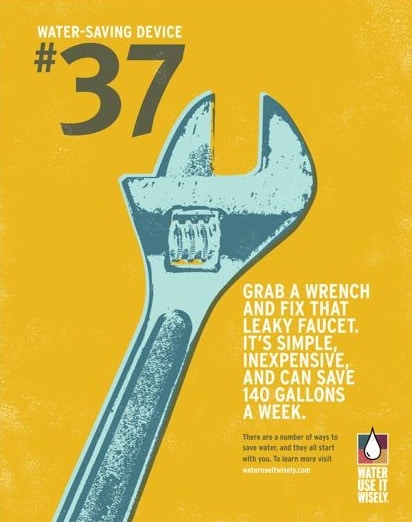
  1. Water Tip #37 Print AdThe Water – Use It Wisely campaign is based on environmental triggers. What are “environmental triggers,” and how do they work?
    “The importance of triggers in your green marketing”
  2. What is the “Three Sunflower” analogy for green marketers in identifying and targeting your audiences when promoting environmental behavior change?
    “How sustainable is your sustainability message?”
  3. What motivates people to make a behavior change more: Because it’s good for the environment or because it’s convenient and easy?
    “The surprising story behind what motivates us.”
  4. Why is it important to speak to a person’s level of “Greenness” to promote behavior change?
    “How well do you know the ‘greenness’ of your customer?”
  5. Why is storytelling so important to changing behavior?
    “Are you a green marketing weirdo trying to change the behavior of normal people?”
  6. How do you make water conservation and other eco-actions personal inside your organization?
    “Feeling all green and tingly inside: How to promote your corporate sustainability initiative internally.”
  7. How to give your water conservation and environmental initiatives handles?
    “Sustainable green marketing isn’t about creating ad campaigns. It’s about igniting movements.”

Donna DiFrancesco, Water Conservation Specialist for the City of Mesa, AZ, is also featured on the show and covered the operational ways businesses can save water.

Derrick Mains said of the water conservation partnership,

greennurture“Water is one of the most overused resources, and it’s costing businesses millions of dollars a year. Thanks to the Water-Use It Wisely campaign over the last ten years, people have become much more water-conscious in their homes. Now it’s time to extend that mentality to the workplace.  This partnership gives GreenNurture an intelligent, effective way to bring important information to our customers about water conservation and adds yet another layer to the Water-Use It Wisely mission.”

You can listen to the show now and call into future shows with questions toll free at 866-536-1100. You can also Tweet your questions to @your3bl.

Picture 1“Your Triple Bottom Line” is a show that unpacks some of the more complex ideas in sustainability. We bring on some of the leading voices in business who make sense of the social, ecological and the economic threads that runs through business. We get them to put aside their talking points, step out of their corporate speak, and have real conversations with us and you our listeners.

How Our Internal Green Conversation Using GreenNurture.com Became a National Topic in The Wall Street Journal

Park has initiated the "One Ream Per Person Per Year" challenge at Park&Co because of GreenNurture.com

Park has initiated the "One Ream Per Person Per Year" challenge at Park&Co because of GreenNurture.com

What started as an internal conversation about how we could become more sustainable in our small business has grown to be part of a national story in the Wall Street Journal. And we have Derrick Mains and GreenNuture.com to thank.

A couple of weeks ago, we deployed GreenNurture to help our agency become more sustainable. We were one of the first to adopt this new website/enterprise platform that helps companies large and small become more sustainable through micro-eco actions created out of upping the conversation about being “Green” within the company.

Our team at Park&Co have been using GreenNurture.com to share ideas on the little things we can do to reduce, reuse, and save around the office.

From our production manager: “I know I may look like a vampire but I don’t think the extra lamps are necessary all the time-especially in the morning.”

From our ACD: “Keep the thermostat a couple degrees higher in summer so people aren’t wearing sweaters at work on a 100+ degree day.”

From our bookkeeper: “We should take the recycling of the job jackets one step further to have our ultimate goal be “to be paperless.” We could store all necessary documentation on the server under a file of the job so that both the accounting and job folders could be viewed. Ultimately we could remove those file cabinets and replace them with a green hammock to catch up on “Z’s” for all the extra time we’ll have created.

From me: “What if we issued just one ream of paper per person per year for basic documents? And then if and when you needed a second ream, you would have to petition for one describing the merits of your need? Would this makes us all think twice about running something through our printers?”

If you haven’t yet checked out GreenNurture.com and what it can mean to your company relative to reducing waste, recycling, and saving money, it’s definitely worth about 20 minutes of your time. That’s all it takes to get your internal eco campaign up and running.

In the meantime, do you want to step up to the “One Ream Per Person Per Year” challenge? It truly monetizes a product that everyone views as a commodity. Think of the money + trees + paper + printer ink + printer power + the cost of recycling + the carbon footprint, you and your company will save just by reframing a ream of paper as something worth vastly more. Scarcity has a way of increasing the value of all items. Basic economics.

One final note: I’d like to give a big shout out to Aly Saxe at Ubiquity P.R. for turning our internal story of sustainability into a national one. Thanks Aly!