ParkHowell.com

Posts Tagged ‘water conservation’

Why water conservation may be the next big thing for corporate social responsibility

Click on the image to read the article

Will your water rates rise like a gallon of ethanol at your corner Chevron?

Probably not.

And that’s why Americans seem to be apathetic about water conservation. Many experts argue that until we hit them in the wallet, they’ll keep wasting water.

So how do you get consumers’ attention about the pending water crisis that is barreling down on us like an Arizona haboob?

You get them to live and breathe it.

Companies and initiatives like American Standard’s Responsible Bathroom, Coca-Cola’s Global Water Stewardship, and The Great Lakes Brewing Company’s Triple Bottom Line are embracing water conservation with cause marketing that is helping to educate and change consumer behavior.

These companies underscore our core belief: an understanding learned from the nearly 14 years of running the Water – Use It Wisely conservation campaign:

“Technology alone will not save our water. You must start with behavior change.”

Click to see the show

Recently, our position on water conservation messaging was featured in Christine Birkner’s excellent article for the American Marketing Association magazine, Cause for Concern, as well as on AMA TV. Like most of the sustainability movement, companies and campaigns propelling cause marketing initiatives around water conservation are pioneers, and we need more heroes leading the charge.

“Water conservation has been billed as the most important environmental issue of the 21st century, yet few American consumers are altering their behaviors – and fewer companies are trying to motivate them to do so.”

Can you point to a corporate initiative that is championing water conservation in your community?

Save water in the most peculiar way

World Water Day always brings out the innovative best in all of us, no matter how peculiar. There’s a new app that’ll help you pass gas in private, AND save water: two laudable efforts.

With a swipe of your finger it plays back the flatulence-dampening sound of a shower without actually running one, so you can do your thing without the resounding ring. And, it shows you how much water you save in the process.

“Silly, useless app,” you say? The new Fake Shower app is from Brazilian water company, Akatu. Apparently the thin walls found in domiciles in many countries leads to embarrassing bathroom “noises” polluting living rooms. In Japan, for instances, I’m told it’s a common occurrence for bathroom dwellers to run showers while cleaning their pipes, so to speak. Now they have a fun app to run instead.

Wonder if we can gamify it?


How weird is this water conservation campaign from the EPA?

I happened upon the Environmental Protection Agency’s new “Wasting Water is Weird” campaign this week, and the only thing more surprisingly unsettling than the campaign spokesman is the thought that the EPA brought him to life.

Who’d expect this Jim Carey-meets-the-strange-dude-rocking-the-bad-hairstyle-driving-his-mom’s-Pinto-at-the-end-of-the-cul-de-sac guy coming out of the feds to help promote water conservation?

But I like the creepiness. Because when you really think about it, wasting water is pretty weird. I mean, we’d never let the tap on a beer keg run freely. But we don’t think twice about letting the water run from our kitchen faucet to answer the phone. Which liquid is going to sustain your life longer?

This campaign captures that thought in a disturbing way. Kudos to those bureaucrats that made water conservation interesting and fun.

You can follow Rip the Drip on Facebook and on Twitter @RipTheDrip, with creepy green gym shorts and all.

What do you think of the work?

What bum luck! A colonoscopy came between me and Oprah.

Several people urged me to follow-up on Oprah’s request.

The Oprah Winfrey Network is looking for stories about people that are making a small change with a big impact, especially as it relates to, of all things, water conservation. Now that’s a niche I know well, given our Water – Use It Wisely campaign, and it’s the reason so many people pushed me to submit a story idea.

Unfortunately, I had to deal with a colonoscopy before I could video tape and write my 2,000 character submission (I used 1998 of the characters). It went out today. Their website gently broke the news to me that I had missed the deadline. Dang it.

So given all of the work that went into my story, I thought I’d at least share it with you. After you read it, and if you think we should be on Oprah, forward it to her show.

Untitled from ParkHowell.com on Vimeo.

How “Water – Use It Wisely” Surfaced in Mesa, AZ, and Became a World-wide Movement

Fifteen years ago, the City of Mesa’s water conservation department had an urgent need to educate their residents about conserving water, but had almost no money to create a campaign.  The answer to their dilemma was hiding in a consumer survey. Residents said, “Don’t tell me to save water. Show me how.”

With that unique insight, a revelation hit us. If we could create a universally accepted campaign based on showing people how to save, then perhaps Mesa could get other cities and states to share in the creation of the campaign and use it themselves.

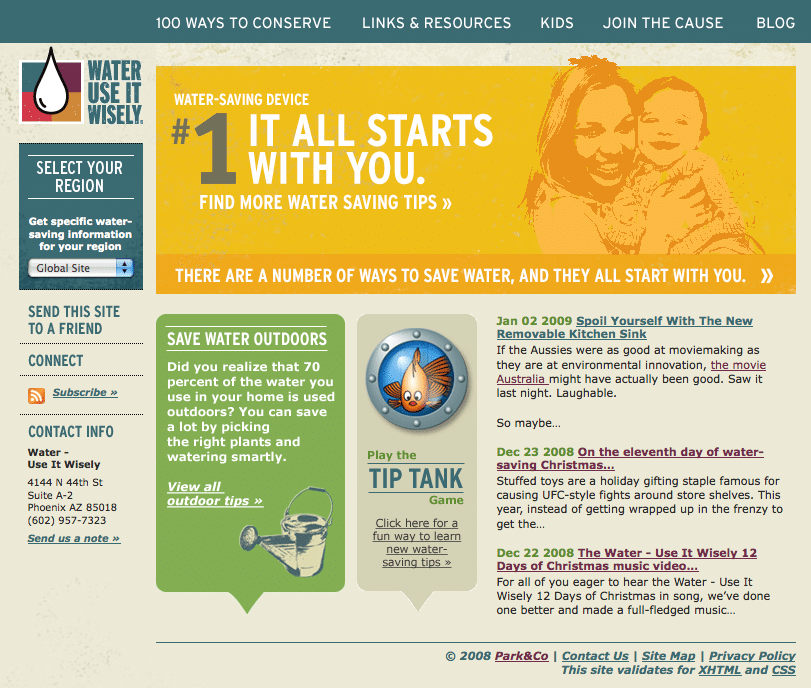
So we took simple, everyday objects that you wouldn’t normally connect with saving water, and made them the hero of our campaign. A toothbrush, for instance, became water-saving device #54, which begs the question, “How can a tooth brush save me water?” It’s an “environmental prompt” that reminds you to turn off the water when you brush and you’ll save around 5 gallons every time. A broom is water-saving device #15. Sweep your driveway or patio, and you’ll save approximately 80 gallons. Water-saving device #1 is people. After all, if we don’t take action the 100+ other water-saving devices won’t work.

Thus, “Water – Use It Wisely” was born with the call-to-action, “There are a number of ways to save water, and they all start with you.”

Cities in Arizona and the state were quick to join the campaign. Our sustainable marketing firm, Park&Co, matched our water partners’ investment dollar-for-dollar with in-kind contributions of creative and production services. We began attracting other states, water municipalities and private utilities. They tapped Water – Use It Wisely’s proven universal appeal and co-branded it with local efforts at a fraction of the cost of creating their own campaign. The campaign, now in its 12th year, is the largest water conservation effort of its kind in the world with more than 400 private and public partners.

Home Depot and Lowe’s have used the campaign to educate their customers about water-saving products and the 100+ ways to save water featured on our website.

In 2006, US AID asked for our help to teach the Turks about how to create and launch a water conservation campaign on Cyprus.

It’s quite an achievement to take a struggling water conservation program in Mesa, Az, and turn it into a world-wide movement. You’ll see what I mean if you simply search, “Water conservation,” online.

So what do you think? Should we be on Oprah?


Seven ways to tell sustainable stories for green marketers

You can now listen to Wednesday’s, “Your Triple Bottom Line” show

logo

I shared my green marketing ideas on “Sustainable Storytelling” over the airwaves as a guest on the radio show, “Your Triple Bottom Line.” Show hosts Angelo Fernando and Derrick Mains, CEO of Green Nurture, and I announced the launch of a unique partnership between GreenNurture.com and the Water – Use It Wisely conservation campaign.

We discussed proven ways to engage your employees through sustainable storytelling, coupled with the Green Nurture online platform to encourage behavior change.

Seven storytelling strategies on “Your Triple Bottom Line”

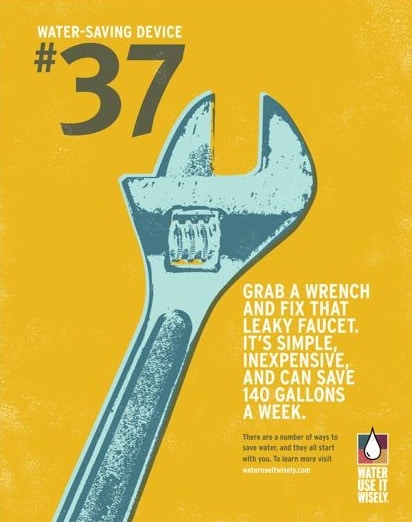
  1. Water Tip #37 Print AdThe Water – Use It Wisely campaign is based on environmental triggers. What are “environmental triggers,” and how do they work?
    “The importance of triggers in your green marketing”
  2. What is the “Three Sunflower” analogy for green marketers in identifying and targeting your audiences when promoting environmental behavior change?
    “How sustainable is your sustainability message?”
  3. What motivates people to make a behavior change more: Because it’s good for the environment or because it’s convenient and easy?
    “The surprising story behind what motivates us.”
  4. Why is it important to speak to a person’s level of “Greenness” to promote behavior change?
    “How well do you know the ‘greenness’ of your customer?”
  5. Why is storytelling so important to changing behavior?
    “Are you a green marketing weirdo trying to change the behavior of normal people?”
  6. How do you make water conservation and other eco-actions personal inside your organization?
    “Feeling all green and tingly inside: How to promote your corporate sustainability initiative internally.”
  7. How to give your water conservation and environmental initiatives handles?
    “Sustainable green marketing isn’t about creating ad campaigns. It’s about igniting movements.”

Donna DiFrancesco, Water Conservation Specialist for the City of Mesa, AZ, is also featured on the show and covered the operational ways businesses can save water.

Derrick Mains said of the water conservation partnership,

greennurture“Water is one of the most overused resources, and it’s costing businesses millions of dollars a year. Thanks to the Water-Use It Wisely campaign over the last ten years, people have become much more water-conscious in their homes. Now it’s time to extend that mentality to the workplace.  This partnership gives GreenNurture an intelligent, effective way to bring important information to our customers about water conservation and adds yet another layer to the Water-Use It Wisely mission.”

You can listen to the show now and call into future shows with questions toll free at 866-536-1100. You can also Tweet your questions to @your3bl.

Picture 1“Your Triple Bottom Line” is a show that unpacks some of the more complex ideas in sustainability. We bring on some of the leading voices in business who make sense of the social, ecological and the economic threads that runs through business. We get them to put aside their talking points, step out of their corporate speak, and have real conversations with us and you our listeners.